
Top Ten Things Law Professors Can Do This Year to Learn About EdTech

Let’s face it, the role that technology can play in the practice of law is becoming more evident – with predictive coding, eDiscovery, and companies like LexMachina that use legal analytics to, among other things, predict the outcome of patent litigation.  But many in the legal academy still cannot conceive of how technology can change legal education.  If you are in that camp or know others who are, let me suggest that we do not dismiss the potential for change in legal education without knowing more about the emerging field of edtech and the forces behind it.  Want to learn more?  Here are ten things you can do this year that might change your thinking about the role of technology in the future of legal education.  The suggestions come from my article, which has other suggestions as well.

1.  Catch up on some important reading.  Read David Thomson, Law School 2.0: Legal Education for the Digital Age (2009).  Also, read the work of Bill Henderson, including A Blueprint for Change, 40 Pepperdine L. Rev. 461 (2013) and Andrew P. Morriss & William D. Henderson, Measuring Outcomes: Post-Graduation Measures of Success in the U.S. News & World Report Law School Rankings, 83 Indiana L. J. 791 (2008). Read David Barnhizer’s article, Redesigning the American Law School, 2010 Mich. St. L. Rev. 249 (2010). 

2.  Read, too, assessments about how technology has impacted and will continue to impact higher education generally, works such as Disrupting College: How Disruptive Innovation Can Deliver Quality and Affordability to Postsecondary Education, and The Department of Education’s Meta-Analysis and Review of Online Learning Studies

3.  Learn about the millennial generation who are “born digital” and how their more networked and connected lives affect the way they approach learning.  A great book on this topic is by John Palfrey and Urs Gasser of Harvard Law’s Beckman Center on Internet and Society, Born Digital: Understanding the First Generation of Digital Natives (2008).  Think about the implications of the fact that between 2000 and 2002, the largest group of first time internet users were between two and five years old, placing the oldest members of this group in college now – and in law school soon.  Begin to understand how the emerging “participatory culture” is changing what one needs to learn to be fully prepared to function in the twenty-first century.  You can do this by reading Henry Jenkins, Confronting the Challenges of Participatory Culture: Media Education for the 21st Century (MacArthur Foundation)

4.  Begin to explore the potential for law schools to employ teaching methods that use technology to a greatly enhanced degree.  For example, read about flipping the classroom, a teaching methodology that blends online lectures (which students view at their own pace as homework) with in-class instruction, as it is used in K-12 education, Jonathan Bergmann & Aaron Sams, Flip Your Classroom: Reach Every Student in Every Class Every Day (ISTE/ASCD, 2012), or watch these videos on flipped learning in legal education.  By migrating lectures to the web, flipped learning can free face-to-face classtime for active learning, including Socratic dialogues, drafting exercises, simulations and role plays.  

5.  Investigate innovations in adaptive learning, a technique using computer software first to assess what a student knows and then to adapt the content taught to the knowledge level of the student, thus providing a more personalized learning experience for each individual.  Computer-based adaptive learning is already being used by the Kaplan test preparation company for college students planning to take the LSAT and GMAT; by Khan Academy for younger students; and by many companies, such as Knewton, for a wide range of users.  

6.  Consider the impact that gaming can have on education.  Follow the work of Jeannette Eicks (Vermont) and Stephanie Kimbro (Stanford), both of whom are working on projects that involve gaming and law.  Read James Gee, What Video Games Have to Teach Us About Learning and Literacy (2003); James Gee, Good Video Games and Good Learning, at http://dmlcentral.net/sites/dmlcentral/files/resource_files/GoodVideoGamesLearning.pdf.  Educational games are available for a variety of topics, including civics, see http://www.icivics.org/ (a game-based website started for former Supreme Court Justice, Sandra Day O’Connor); climate change, see http://www.bbc.co.uk/sn/hottopics/climatechange/climate_challenge/; national conflicts, see http://www.peacemakergame.com/game.php; and even algebra, see http://www.dragonboxapp.com.

7.  Monitor the impact that recent decisions by law schools to develop online programs for non-JD degrees has on programs at other schools, such as the decision by graduate tax law programs at, among others, Alabama, Georgetown, NYU, Villanova, and Boston University to offer their programs online. Read Distance Learning in Legal Education:  A Summary of Delivery Models, Regulatory issues and Recommended Practices. Attend a meeting of the Distance Learning in Legal Education Working Group, organized by Vermont Law School professors Rebecca Purdom and Oliver Goodenough.  The group meets three times a year, once in the fall (which is in a few weeks at William Mitchell School of Law), once during the AALS Annual Meeting, and a third time in the spring.  

8.  Monitor the effectiveness and reaction of law graduates who take online bar preparation courses such as Themis. 

9.  Explore some of the new apps being developed for iPads and Androids to teach legal concepts.  Law Stack is an Apple app for legal research loaded with various federal statutes.  Law School Dojo, by Stanford Law’s Margaret Hagan, is an app with quizzes on legal concepts for a range of subject matters, including contracts, torts, civil procedure and international law.

10.  Register for and attend the 2015 AALS Clinical Conference, May 4-7 in beautiful Rancho Mirage, CA.  The theme of the conference is the “New Normal.” One of the three tracks for the conference is devoted to the future in the “new normal,” both for the practice of law and for legal education. As to law practice, we hope to address how professors can understand the rapid and profound technological change that could well remake law practice and how those changes can advance our work for social justice. We want to explore how changes in service delivery and structure of law practices can and should impact our teaching. And we hope to address how professors can better use technological advances and insights from learning sciences in their teaching. 

The internet, the driver of all the changes and developments noted above, is a technology and a tool that, for the reach and extent of its often disruptive and its often liberating effects, can be compared only with the printing press.  When writing of Gutenberg’s invention, Elizabeth Eisenstein, a careful and meticulous historian of immense reputation, wrote (favorably quoting Renaissance scholar Myron Gilmore) in her two-volume magnum opus, The Printing Press as an Agent of Change, that “’[i]t opened new horizons in education and in the communication of ideas. Its effects were sooner or later felt in every department of human activity.’” As I explain in my recent article, I strongly believe that “[s]o too it is, or sooner or later shall be, with the internet.”

Are there things I am missing?  Add them in the comments below.

Shultz and Zedeck: Collaboration and Motivation in Orientation!

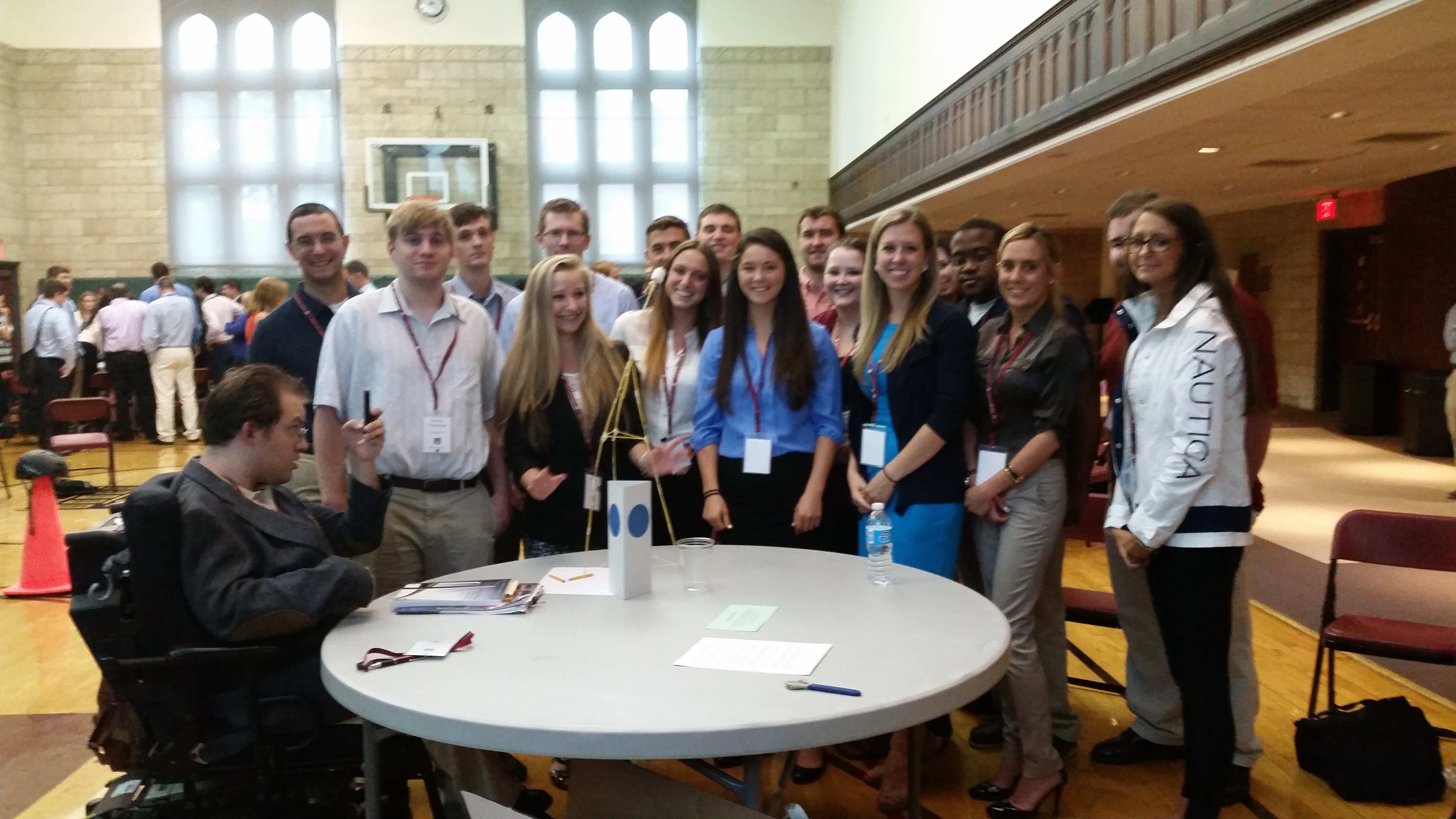
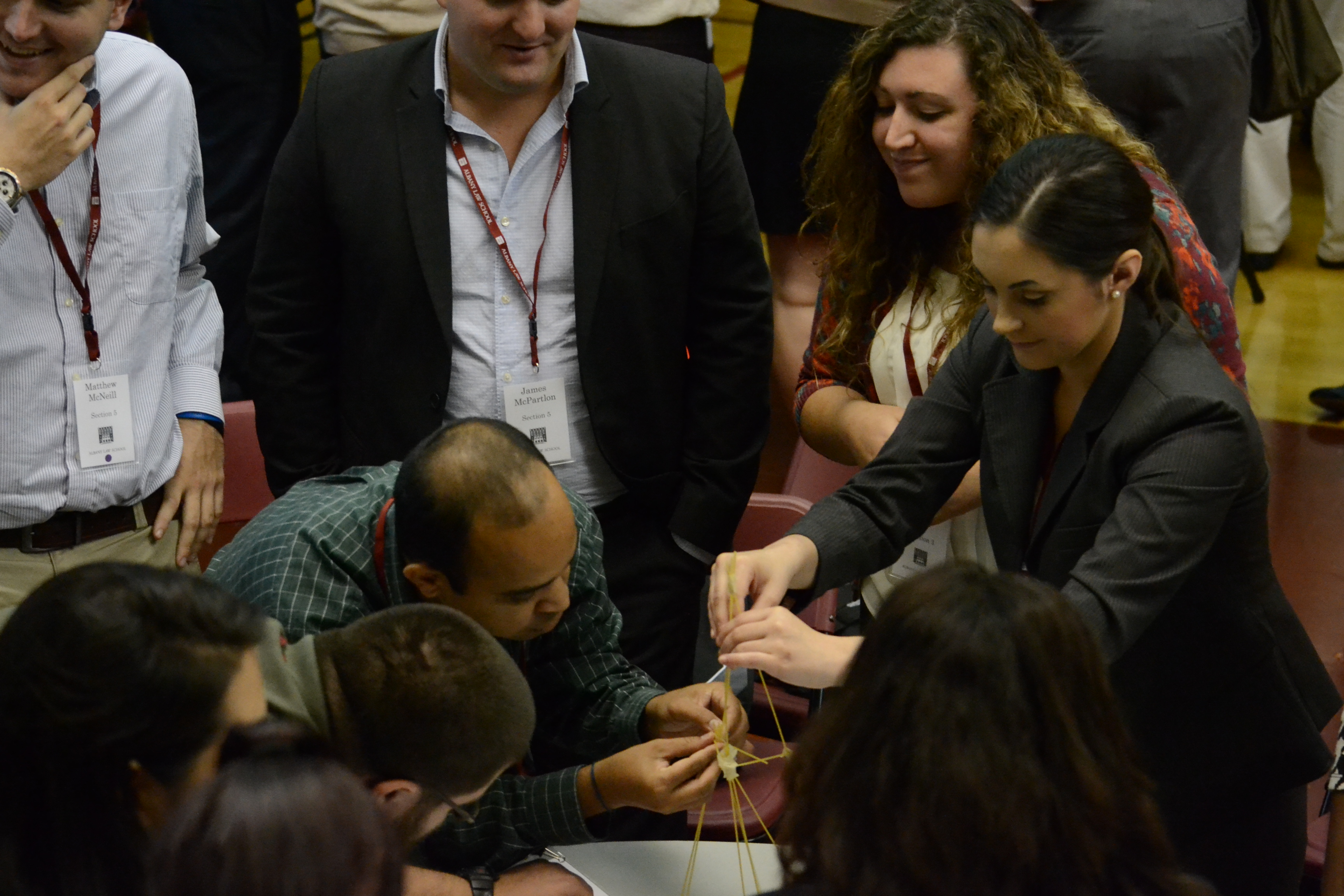
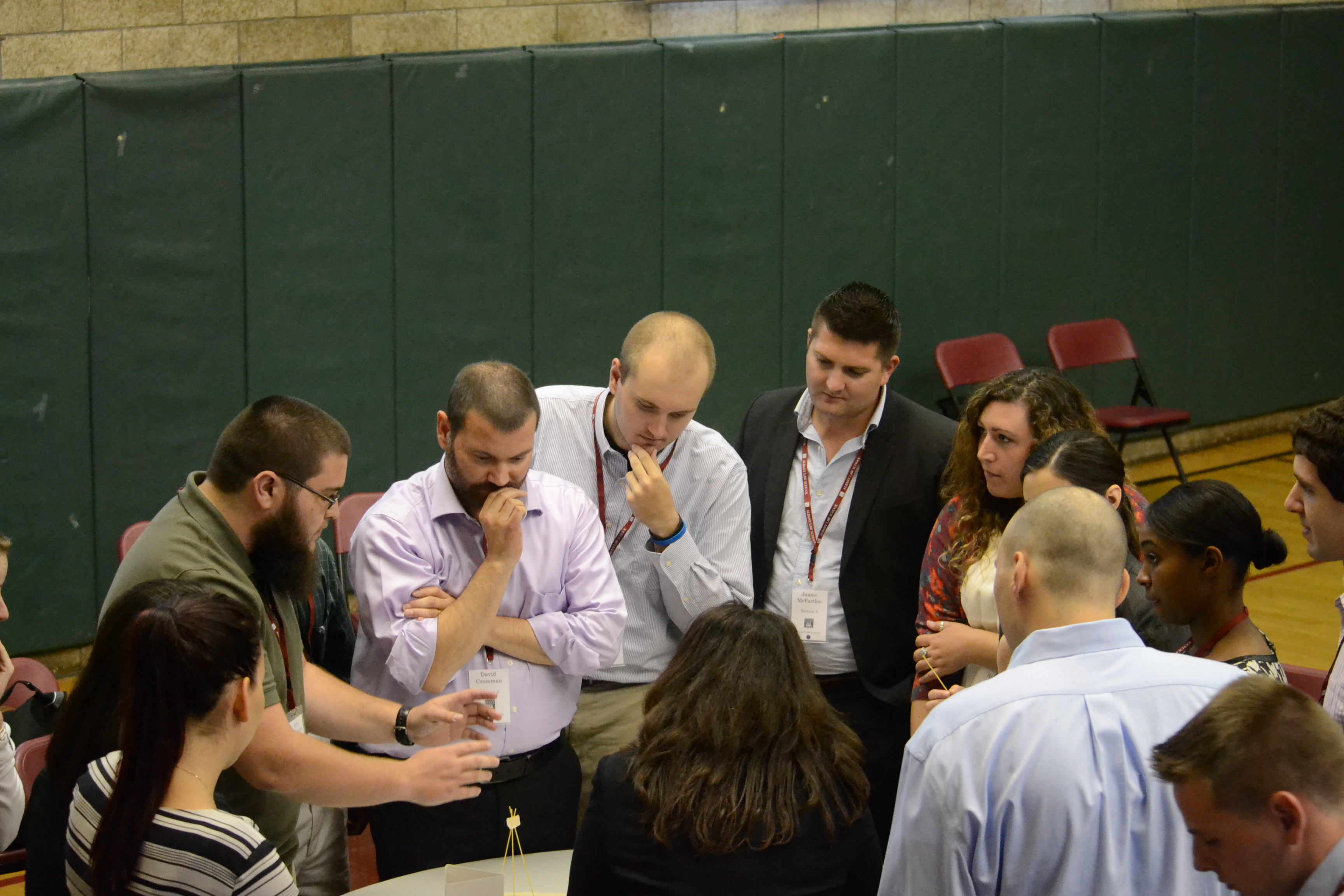
One-Ls at Albany Law, just like those at many other schools, are in the midst of Fall 2014 Orientation. Today, I participated as a  “faculty observer” in a collaborative skill building exercise organized by our Associate Dean Alicia Ouellette.  Imagine my delight to see copies of Schultz and Zedeck’s 26 lawyering effectiveness factors distributed at each table in the school gym!

Teams of 20-25 students, most of whom had either just met each other or not yet met, were tasked with:

  • Assembling a small children’s bike (to be donated to the Boys and Girls Club); the first team to both build the bike and have a team member ride the teeny-tiny bike around the orange cone course set in the gym would be declared winner. 🙂
  • Building the tallest pasta-marshmallow structure
  • Making sure every student on the team participated in the endeavor.

Faculty participants were assigned to observe what they saw happen during the group exercise, report their observations to their student team, and explore with the student teams questions such as:

  • what worked well?
  • what was challenging about  mandatory collaboration?
  • what might they have done differently to more effectively collaborate?
  • what might these exercises suggest about effective lawyering?

The students brought good humor to the task.  They brought a range of experiences, including a few with engineering backgrounds and/or “mom/dad” know-how, and a range of abilities. The fact that the bikes were to be REALLY used by local community members was a motivating factor.  In fact, students vocally expressed concern about the safety of the quickly assembled bikes noting,  “Remember, some kid is going to ride this!” and “It has to be safe.”

By the end of the assigned time period, everyone in my group had participated …. at least a bit. The debriefing was more effective than one might have predicted. One student on my team noted gender differences in approaches – a number of women were reading instructions for assembling the bike while a few of the males started to immediately put pieces of the bike together. This led to a discussion of THE CONFIDENCE GAP.  Another student noted the difference between working on a task when you know what the outcome should look like (the bike) and working on a concept without a uniform or agreed upon vision of what the outcome looks like (the highest pasta structure). Many students reflected on the significant importance of communication skills, particularly listening.

Other teams reflected on the challenge of being asked to accomplish a collective task when most members of the team felt inadequately prepared. With faculty guidance, that team explored when that might happen in law school or in practice.  Issues such as time management, resource management – one team ran out of tape – and problem solving techniques were also discussed. Students, encouraged by faculty suggestions, also pondered what kind of teams they might participate in their post-graduation future .

As I looked around the tables, I could not help but think of Richard Susskind’s book,  Tomorrows Lawyers.  These one-Ls will be entering a profession and a world in which working with others, problem solving, creative thinking, and clear communication will be even more critical for those in our profession than in times past.   As graduates, these students will be participating in teams and in collaborative enterprises that we faculty probably cannot now envision.  However, it is our job to facilitate their acquisition of the kinds of skills and capacities and attitudes that will best serve them in the uncertain but potentially exciting future.   Happy New Semester all! Happy Facilitating!

Orientation 20140813_142119


Orientation Pic 2 Orientation Pic 7 Orientation Pic 6 Orientation Pic 5 Orientation Pic 4 Orientation Pic 3 Orientation Pic 1

The Baby Has Finally Been Birthed!

Comprehensive revisions passed

The ABA House of Delegates passed the comprehensve revisions with “minimal  fuss” according to the ABA Journal linked  above.  One area, however, garnered  significant attention and also resulted in  an odd, though perhaps meaningless ,  procedural move.  The House voted  to send back to the Section on Legal Education for further consideration the comment to standard 305 which prohibits payment to students for credit-based courses.

What does this mean? Law schools which have not already done so must start identifying, articulating publicly and assessing student learning out outcomes, providing every student six  credits of clinic or clinic-like experiential courses and requiring students to take two credit hours worth of professional responsibility coursework.

Well, it’s a start……

Wishing students success on the bar exam

The Bar Exam is upcoming. And with it comes heightened stress and potential for students, but also an odd chance for diverging interests between a small number of students and their law schools.

Bar exam homonyms: high stakes; gateway, leveler, stressor, useless unnecessary burden after three years of school, fee generator, standardizing, and proficiency. I’m sure “bar exam” conjures up many more thoughts and meanings for others. For law students, the impact of this exam is wide-ranging. Most graduates spend months of intensive study preparing for the bar exam. They incur additional debt for these review courses; they devote months of their lives to study intensively for the exam. Exam passage marks the entree into our profession with all of its benefits and burdens. Exam passage allows our graduates to practice law and makes more likely their getting and keeping a job sooner rather than later.

While for individual students, we provide encouragement, cajoling, and hope for exam success, their exam success has an additional impact on us. For law schools, the bar exam is a factor in accreditation and in reputation. The ABA accreditation standards require a law school to meet a bar pass requirement that can be done in one of two ways: “either by showing that 75 percent of its graduates who took the bar exam in at least three of the previous five years passed or by showing that its graduates’ first-time bar pass rate was no more than 15 points below the average bar pass rate for ABA-approved schools in states where its graduates took the bar.” The ABA, this spring, did not follow through on a proposal that would have increased the passage percent rate requirement from 75 to 80 percent. This connection to accreditation, while arguably standardizing law schools, can recast student success on the bar exam from an individual achievement and triumph to an institutional success or failure.

Therein lies a challenge for a small number of students – reconciling the individual student’s path toward bar exam success with institutional markers of success. Where one student may benefit from repeated attempts at taking the exam, gaining familiarity and comfort and so easing stress that inhibits success, the student’s school must count that student’s learning process as a “failure” against institutional success and reputation. To foster institutional reputation, encouraging some students to wait to take the bar exam seems a good path; on the other hand, for the student who would benefit from the exposure, supporting the student’s decision to take and re-take may be the better path for the student even if not for the institution. A delicate balance is needed when we approach those students who are at risk of not passing the bar exam.

Of course, student success or failure arises from many factors, and the choice to take the exam in the face of difficulties is the graduate’s. It’s also worth remembering that many famous people did not pass the bar exam on their first try including President Franklin D. Roosevelt, First Lady Michelle Obama, and even Supreme Court Justice Benjamin Cardozo. So, I’m going to encourage all of our students to know themselves, to work as hard as they can in the way that works best for them, and of course: wish all students success on the bar exam.

Thirty-One Themes of Thought

“Thirty-One Themes of Thought” is the title I gave my fifth grade class poetry compilation.  What could this possibly have to do with best practices for law professors?

This post, my first for this blog I have long admired, I conceived as a commentary on what I call my “thematic” approach to law teaching.  In my doctrinal Family Law course as well as in my Family Law Clinic I stress recurring themes: the intense public-private tension inherent to Family Law; social change as catalyst for legal developments; storytelling as advocacy; client-centeredness; and holistic lawyering.

As I pondered this concept of “thematic teaching” my mind wandered repeatedly to that alliterative “Title” my 10-year-old brain fashioned . . . 35 years ago.  My use of the word “theme” was likely less about dedication to big-picture thinking than it was about grappling for a word other than “poem” to make my little manila-folder-booklet different from the rest in some small way.  Yet upon further reflection I find a resonance in that word choice with my current work and my teaching style.  Calling my booklet “Themes of Thought,” I believe demonstrated a constant yearning for connectivity (hence the alliteration) and a broad view (referencing the “thought” our class put into each poem)  that is part of my identity.

Taking a thematic approach to law teaching is not something I was taught–it is something that I developed organically as I grew the past 12 years as an educator.  And although I have been aware of it as my approach for years, I just a few months ago began to name it and reflect on it.  Reflection, I firmly believe, is a fundamental aspect of my professional growth as a professor and a lawyer, but also of my students’ growth.  Reflection as a tool in clinical law teaching is nothing new.  I first experienced it as a law student invited/required to submit journals routinely during my clinical year.  Borrowing that tool from my mentors was arguably the single best decision I made as a new clinical professor four years ago.  Reflection fosters self-awareness, which fosters a maximization of strengths.  Lawyers work hard, think critically and often receive little praise from clients and judges alike–not to mention opposing counsel.  Reflecting on one’s accomplishments and professional development, in addition to client interactions, shows budding lawyer (our students) that they can do this work and in fact are doing it well on many fronts.  By the same token, the opporutnity for feedback from their professor or other clinical supervisor through submission of journals is a safe and controlled space to reflect on mistakes and engage in contemplation about how to improve skills while a mentor helps them process those often uncomfortable realities.

This methodology of reflection and self-awareness is different in the traditional law school classroom setting than clinics, but it can be done.  Several colleagues have written and presented at conferences on using written reflections and other tools in non-clinical classrooms.  In my thematic teaching paradigm, I use several approaches in my Family Law lecture course, which often holds enrollment of over 50 students:

1. On Day One of class I explain the main theme of the course, which is the public-private tension mentioned above.

2. My “big picture” approach is evident from both my remarks that day in class; my syllabus which describes each class period’s theme; and the casebook, which opens with commentary on that very same public-private tension unique to Family Law.

3. I assign casebook material for Day One, comprised of several United States Supreme Court cases interpreting Due Process liberty interests.  During class I ask students to ponder why a course on Family Law suddenly looks so much like a Constitutional Law course.  Drawing their attention back to the public-private tension theme, I remind the students that Due Process liberty inquiries center around that same public-private tension.

4.  One Day One I dispense the material via lecture and PowerPoint, but clarify that I use the Socratic method from Day Two forward and call on students at random.  The Socratic method promotes self-awareness and reflection in a way no other methodology can offer, when managed successfully.  Each teacher must define success for themselves, but for me it means engaging the student about why they responded as they did, regardless of the accuracy of that response.  Even if the response is flawed in some way, I invite them to thoroughly vet it.  Then I clarify any flaws–with compassion and professional respect.

5. Volunteered answers, and questions, are welcomed in my classroom.  The questions are particularly useful for promoting reflection as well as larger themes, as they often stem from common public misconceptions about Family Law ripe for discussion.

6. Returning back to Day One for a moment, I ask the students something critcal after my introduction of the course themes and my teaching style, but before my lecture on the assigned material.  I invite them to mindfully reflect on whether this course will serve their needs as a learner.  Immediately, they as listeners are cued to reflect what they do need as learners of the law.  With what I hope is humility, I remind them that my brilliant colleague Dara Purvis also teaches Family Law and they can take the course with either prof. Students dropping my course after hearing that speech does not offend or scare me, and I stress that.  Occasionally a student walks out at that point, never to return.  That is utterly fine.

7. Finally, the final exam.  After a semester of thematic teaching and, one can assume at least a sliver of reflective learning, the students are asked at least one question on my exam about the public policy aspect of Family Law. The question is not a fact pattern.  Other parts of my exam utilize those.  But the policy question asks them to consider (and sometimes describe) an area of Family Law and what they learned about it, and opine on the efficacy of that legal framework or approach.  I like to end the semester the way we began, with reflection on the big picture, with consideration of our legal system as social underpinning.  How does the law reflect our values and social norms? Who gets to define those norms?  How much government regulation of private decision-making on personal matters is too much?

What is your signature teaching approach?  I ask my clinic students to reflect on what is their unique style of lawyering.  As their teachers I believe we are well served by reflecting on what is our unique style of teaching. The growth among our academy and our students is symbiotic.  Let us embrace that.

Writing about Teaching Literature

This may be helpful for those of us whose summer plans include scholarship on teaching and learning.
….. And speaking of the fruits of our labor, the blueberries in the farmers markets on the East Coast are really spectacularly delicious right now.
What “fruit” scholarly or organic appeals to you this summer?

Contributor's avatarTeaching & Learning in Higher Ed.

"Writing" by Jeffrey James Pacres (CC BY-NC-ND)by Laura L. Runge

The MLA recently released its long-awaited report on Doctoral Study in Modern Languages and Literature. Among its recommendations, the report argues for greater support and value for teacher-training. Although not an early harbinger of change, the report gives a welcome endorsement to strategies that we have seen developing in doctoral programs around the country.Report of the MLA Task Force on Doctoral  Study in Modern Language and Literature I’ve taught a practicum in teaching literature at the University of South Florida since 2004. I’ve also written two teaching guides for Norton and a couple of articles on pedagogy. Whereas in the earlier days I felt something like of a lone voice in the wilderness among my colleagues in English, I’ve watched the scholarship on teaching transform to a diverse and robust field.


There are now many opportunities to share our scholarship on teaching and learning, and there is much to be learned from the variety of classroom experiences in…

View original post 946 more words

Trauma Informed Services and Trauma Informed Supervision (Another Post From “the Real World”)

Antoinette Sedillo Lopez's avatarAsedillolopez's Weblog

In my new position as executive director of a non-profit dedicated to eliminating domestic violence, I have learned a lot about trauma.  Trauma causes three main automatic reactions in the brain:  Fight, flight or freeze.  Trauma also makes us more sensitive to triggering events that can recall the trauma in our brains.  A smell, the slamming of a door, a sharp noise, even a tone of voice can trigger a reexperice of the traumatic event.  And, service providers, including lawyers, experience vicarious trauma by listening to the stories of traumatic events experience by others.  Knowing that this is happening is the first step in learning how to address the effects of truama.  At Enlace Comunitario, we try to have polcies that don’t retraumatize our clients.  We try to have a warm and welcoming waiting room and we don’t have harsh policies such as cancelling an appointment for someone who comes…

View original post 133 more words

ABA Council on Legal Education Maintains Separation Between Paid Work and Academic Externships

Last week, the ABA Council on the Section of Legal Education and Admission to the Bar (Council) approved a comprehensive revision of the accreditation standards for law schools and moved the package of revisions on to the ABA House of Delegates for approval at its August meeting.   Before finalizing the package of revisions, the Council voted on the  Standards Review Committee ‘s   recommendation to remove  the bar on paid externships,  a recommendation strongly supported by the ABA Law Student Division.   The Council rejected that proposal and voted to maintain the separation between academic externships and paid work.   The National Law Journal reported on the Council’s action and quoted Barry Currier, the ABA’s managing director for admissions and legal education, “The council received a lot of comments and decided to not make the change. The fundamental reason is this perceived tension between the obligations of someone who is a paid employee and a student.”

At first blush, paid externships sounds positive — a  way to assist law students in reducing their debt while engaging in experiential learning.   That point has been argued by the Law Student Division.  However, as I discussed back in February,   permitting paid externships would create new problems.  One of the more likely outcomes was identified in the comment submitted by the Clinical Legal Education Association,

But those employers that are most capable of affording the full cost of a “paid externship” are also likely to accept only externship students who they deem qualified for long-term employment. Reliance on class rank would become the norm for “paid externship” placements. Traditionally, clinical courses have provided opportunities for all students to hone their abilities and prepare for practice. Students who are not at the top of the class have benefited from a chance to develop and demonstrate abilities that do not emerge in an exam. Particularly in light of the legal market and the needs of our students, CLEA is profoundly concerned about a change in the Interpretation that would benefit only students whose rankings are at the top of the class.

Moreover, those employers able to bear the full cost of a “paid externship” would more than likely “shop”among law schools. Faced with the choice of establishing a recruitment program with a school in the top tier or with a school in the third tier, CLEA believes that employers would choose the former. We suggest that revoking Interpretation 305-3 would limit the availability of certain kinds of experience to top-ranking students at top-tier schools and severely restrict students’ opportunities to participate in clinical and experiential education.

In short, CLEA strongly supports the interests of students, by seeking to assure that all students at all schools engage in high quality work, under close and careful supervision. We want more for our students than checking cites and reviewing depositions. We seek a set of standards that ensures high quality clinical legal education, in which supervisors are fully invested in teaching and mentoring students. CLEA encourages mandates that will result in equal access to all courses and for all law students. It is in the best interests of students to preserve a separate market for paid employment in which students are compensated with the fair market value of their work. Permitting the mixture of educational and employment functions will result in the diminishment of value for each, harming both students and law schools.

In its comment, the Society of American Law Teachers (SALT’) raised excellent questions about the the  likely, although unintended, consequences,

Having employers pay students also raises difficult questions about control of the assignment and crediting process. Could the employer fire a student for not performing at high enough levels?
Would a faculty supervisor be able to reassign a student if the employer failed to provide adequate onsite supervision if that would have implications for other students working for that employer, with or
without receiving academic credit? Could students refuse tasks assigned by their paying employer if those tasks were not consistent with the learning goals and the placement expectations? Would students be willing to discuss frankly with faculty supervisors any externship site supervision problems if they worried that it could mean displeasing an employer and potentially losing income. These are just
some of the troubling pedagogical issues likely to arise if students earn academic credit for paid employment.

We do need to find ways to reduce law school costs and defray student debt,   but not at the expense of providing appropriately designed and equally available academic experiences.  The Council made the right decision for legal education and for law students.


Innovative licensing of architects – a model for the legal profession?

While many who comment about the design of legal education look to medical schools, it seems to me that architecture schools provide another useful model. The architecture curriculum integrates classroom instruction with a central role for the studio (the equivalent of simulation or clinical work in law school), and the review of student work (also called critique or “crit”) is central to the studio. There may be lessons to be learned.
Now an alternative method of licensure (similar to the Daniel Webster Scholars Program in New Hampshire, but on a larger scale) is being considered:
NCARB Endorses New Path to Becoming an Architect:  Architect Licensure Upon Graduation

Incorporating internship and examination requirements into university education, the regulatory organization aims to simplify and accelerate the licensing process.

30 May 2014
Washington, DC—The National Council of Architectural Registration Boards (NCARB) Board of Directors has announced their endorsement of the concept of an additional, structured path that leads to licensure in a U.S. jurisdiction. The new path—licensure upon graduation from an accredited program—would integrate the rigorous internship and examination requirements that aspiring architects must fulfill into the years spent completing a professional degree in architecture.
The concept was designed by a distinguished group of volunteers convened by NCARB, which recommends national architect registration standards, called the Licensure Task Force. This group, which was initially formed in mid-2013, is headed by NCARB’s Immediate Past President Ron Blitch of Louisiana, and it includes former and current leaders of NCARB, the National Architectural Accrediting Board (NAAB), the American Institute of Architects (AIA), the Association of Colleges and Schools of Architecture (ACSA), and the American Institute of Architecture Students (AIAS), as well as interns, recently licensed architects, program deans and instructors, and jurisdictional licensing board representatives.
A Progressive Path
Describing the work of the Licensure Task Force, NCARB CEO Michael Armstrong said, “NCARB is engaged in streamlining and simplifying the licensing process for aspiring architects, and we are actively re-engineering all elements of the architectural licensing process—education, experience and examination—to focus on facilitation of licensing.”
“This additional path to licensure is another concrete step to reimagining and reconfiguring each part of the process while upholding the rigorous standards needed to protect the public’s health, safety and welfare,” he said.
This progressive concept was borne of research and development efforts by the Licensure Task Force, with leaders from diverse segments of the architectural community to analyze each component of the licensure process to identify overlaps and redundancies to existing programs.
Now beginning the second year, the Licensure Task Force will start to identify schools interested in participating in the program. NCARB expects to issue schools Requests for Information later in the year, followed by a Request for Proposal process in 2015.
Exam Evolution
In addition to the licensure work, NCARB also announced this month that a transition plan is underway to guide the implementation of major improvements and changes to the Architect Registration Examination® (ARE®), the test that all prospective architects must take to get their licenses. The new ARE 5.0 will launch in late 2016, while ARE 4.0 will remain available for at least 18 months after the launch.
The exam is required by all U.S. states, the District of Columbia, Guam, Puerto Rico, and the U.S. Virgin Islands for initial architectural licensure by assessing candidates for their knowledge, skills, and ability to provide all services required in the practice of architecture.


REMINDER: Educating the Transactional Lawyer of Tomorrow

Tina L. Stark Gives Kickoff Speech for Emory Law’s Conference on Transactional Law Education,

June 6-7

REMINDER:  If you haven’t yet registered for Emory Law’s Fourth Biennial Conference on Teaching Transactional Law and Skills, entitled “Educating the Transactional Lawyer of Tomorrow,” you should do so now.

Tina L. Stark will return to Emory to kick off the Conference by updating the fantasy curriculum that she proposed in her speech at the inaugural conference in 2008.  On Day Two, the keynote panel will address the topic, “Skills is Not a Dirty Word:  Identifying and Teaching Transactional Law Competencies.”

You won’t want to miss these or the many other terrific sessions we have planned.  You can register for the Conference by clicking here.  If you have any questions about registration, please contact the Conference Coordinator, Edna Patterson, at edna.patterson@emory.edu.

Please click here to download the 2014 Conference Schedule.

I hope to see you in June.

Sincerely,

Sue Payne

Executive Director

Center for Transactional Law and Practice

Emory University

1301 Clifton Road

Atlanta, Georgia  30322-2770

sue.payne@emory.edu

404-727-3202

Five Tool Lawyers

Leading Northwest legal practitioner and technology entrepreneur Marty Smith has an interesting post on the Five Tool Lawyer over at Legal Refresh. Using the metaphor of the Five Tool Lawyer, Marty breaks apart the stages of problem solving, incorporating risk analysis in a way I found helpful. In my response Five Tool Lawyers and Legal Education, I critique aspects of the Five Tool Lawyer metaphor for compressing too much into the 1st [Use interviewing skills to gather client facts, goals and needs] and 5th tools[Counsel, document, negotiate and advocate on behalf of client]. But here’s why I thought the metaphor was compelling:

"Compelling, because [it] moves beyond issue spotting v. problem solving to articulate the stages of problem solving, targeting a spotlight on often overlooked aspects. . . . By focusing on risk, the metaphor highlights two often neglected stages of the lawyer’s work – “use judgment to assess actual risks” and “problem solve for best way to meet client’s needs with minimal risk.” At the same time, it implicitly places the legal problem in the larger context of the individual’s life, or the business’s health. And it underscores the fact that lawyers need to know how to assess the significance of legal risks within that larger context."

Prepared to Practice?

This article in the New York Times is about a different profession, but it seems familiar.

http://well.blogs.nytimes.com/2014/04/24/are-med-school-grads-prepared-to-practice-medicine/?_php=true&_type=blogs&_r=0

New York Law Journal Special Report on Experiential Learning & Charting a Career Path

Wanted to get this Special Report out to you ASAP! I am poring over it now and will report back soon!

 View the Digital Edition of this Special Report.

Experiential Learning: Practice Makes Perfect

Bruce A. Green, the Louis Stein Professor at Fordham Law School, writes: Making students ready for practice is not just a task for the formal curriculum. Law students spend much of their time in law-related pursuits outside the classroom including in extracurricular activities and part-time and summer employment. Law schools strive to help students make the most of these opportunities.

Theory Makes Successful Lawyering Possible

Jeremy Paul, dean of Northeastern University School of Law, writes that the over-emphasis on the divide between theory and practice lurking within today’s calls for law school reform obscures a far more basic reality. Grounding in “theory” is what makes successful lawyering possible in the first place.

Alternative Career Tracks Are Innovative and Necessary

Richard A. Rosenbaum, the chief executive officer of Greenberg Traurig in Manhattan, writes: Law schools, firms and seasoned attorneys must continue to work together to creatively ensure that we keep open the doors of opportunity to emerging legal talent.

Building ‘Collaborative Intelligence’ in a Challenging Legal Market

Alison Nina Bernard, the director of corporate practice at Fried, Frank, Harris, Shriver & Jacobson, and Niki Kopsidas who oversees firm-wide lateral partner hiring and integration at Blank Rome, write: In today’s highly competitive legal market, an attorney needs a high level of Collaborative Intelligence to help clients meet their strategic business goals, and law firms and other legal organizations need to foster a culture where knowledge and expertise are shared openly and effectively.

Recalculating Goals to Move Forward

Jill Backer, associate director for employer relations at Brooklyn Law School, writes: Because plans and people change, as do industries and the employment market, your goals must be able to change as well. If your goals are resilient then you can be too.


Read more: http://www.newyorklawjournal.com/id=1397823099047/Law-Schools#ixzz2zYPVtExj


Agenda Circulated For April 25th Standards Review Committee Meeting

As readers to this blog know from earlier posts, the Council of the Section of Legal Education and Admissions to the Bar completed almost all of its work on comprehensive review at its meeting held on March 14-15, 2014. Importantly, the proposed changes  incorporate identification and assessment of student learning outcomes into the Standards.  In March, the Council also approved a few final matters for Notice and Comment:

  • Interpretation 305-3 (Study Outside the Classroom)
  • Interpretation 503-3 (Admission Test)
  • Standard 505 (Granting of J.D. Degree Credit for Prior Law Study)
  • Chapter 8 (Council Authority, Variances, and Amendments)
  • Definitions
  • Rules of Procedure

Today,  the  Standards Review Committee (which reports “up to the Council”)  posted the  agenda and supporting materials for its next meeting which will be held in St. Louis on April 25th .   The agenda begins with a Hearing on the matters out for Notice and Comment: Interpretation 305-3, Interpretation 503-3, Standard 505, and Chapter 8.   The SRC will review  the posted comments as well as  the draft final report of the proposed comprehensive changes.

The posted material also  includes a helpful summary of Council actions ( Council acts on ABA law school approval standards at March 2014 meeting) and a statement of next steps:

The complete set of revisions is expected to be reviewed by the ABA House of Delegates in August 2014 in accordance with House Rule 45.9. The House may either concur with the Council’s decisions or refer a proposed change back to the Council for further consideration. Any reference back to the Council must include a statement setting forth the reasons for the referral. A decision by the Council is subject to a maximum of two referrals back to the Council by the House. The decision by the Council following the second referral is final.

The end of this comprehensive review is in sight!

“Don’t Skimp on Legal Training” NYT Editorial by Chemerinsky & Menkel-Meadow

CHECK THIS OUT: